Trees provide beauty, shade and habitat for wildlife. They help conserve soil and water and act as wind, noise and visual buffers. Trees in communities are an asset and must be managed to maintain their health and prevent problems.
Reliable electric service is also an integral part of our lives. South Plains Electric Cooperative strives to provide safe and reliable electric service. To achieve these goals, we must manage trees near power lines.
If you have questions or concerns about any vegetation near your home or business, please call Member Service at 806-775-7766.
First and foremost is public safety. Every year in Texas, people are injured or even killed when they climb or prune trees near power lines. High-voltage lines are not insulated and direct contact usually results in death by electrocution. A tree contacting a power line can also become energized, injuring someone touching the tree. Children should never climb or play in trees near power lines. Trees contacting power lines can also start fires, endangering lives and property.
Many trees are located too close to power lines. Power outages can occur when trees grow into or fall on power lines. Service interruptions caused by trees are more than an inconvenience; they can endanger life through the failure of life support systems, fire alarms and traffic signals. Power outages can also be very costly, especially to commercial and industrial customers; and as a cooperative utility, all member-owners bear the outage costs. It’s your utility and your responsibility.
SPEC routinely requires access to inspect trees near its lines and schedules periodic maintenance. SPEC prunes trees that interfere with power lines and may even need to completely remove a tree because of its condition.
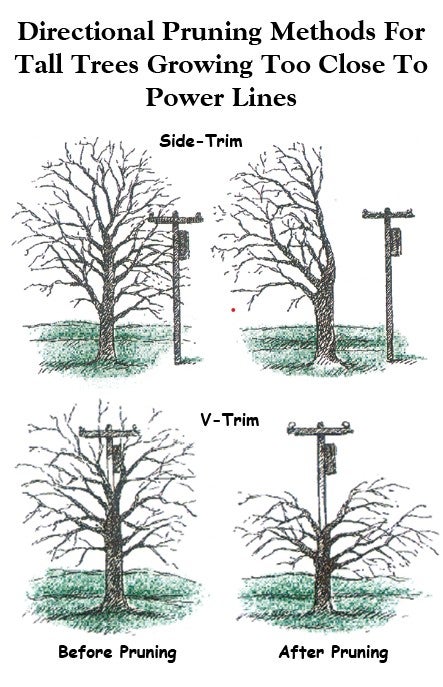
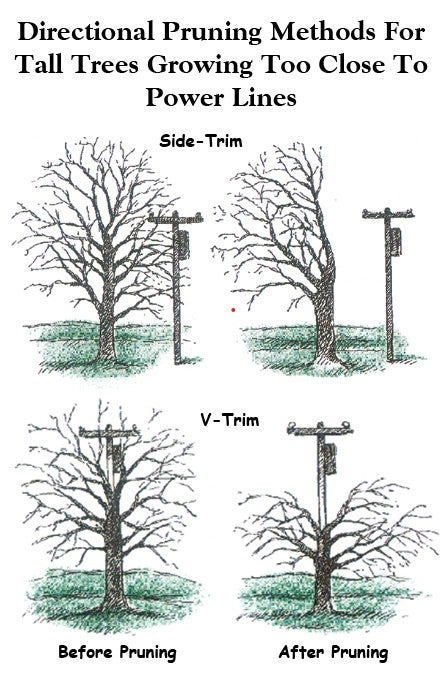
When pruning trees, SPEC determines the required distance based on the voltage of the power line and the type of tree. Some trees need to be pruned more than others to prevent problems. According to the American National Standards Institute A300 Pruning Standards, SPEC hires professionals to prune trees, such as Asplundh. They use natural or directional pruning methods, which direct the growth of trees away from the lines and also help ensure the long-term health of the trees. (See photos for visual examples.)
NO! By Texas law (Health & Safety Code, Chapter 752), only professionals who are authorized by SPEC are allowed to prune or remove trees closer than 10 feet to high voltage power lines. These professionals have been properly trained and equipped to do so. Serious injury and even death can occur when untrained persons or homeowners attempt to prune trees closer than 10 feet to high voltage power lines. Call SPEC member service for assistance at 806-775-7766.
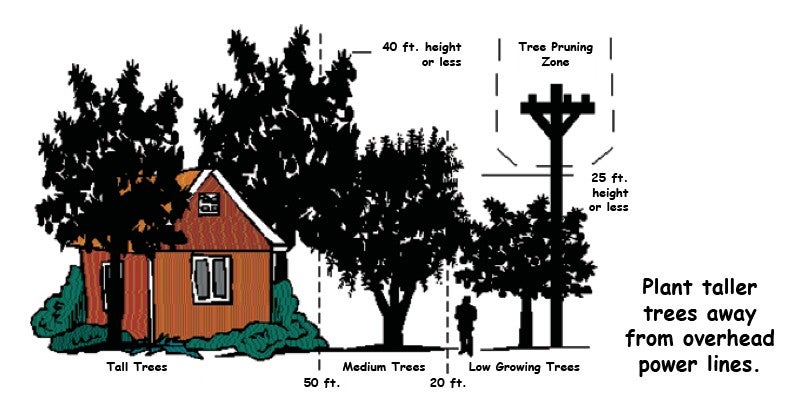
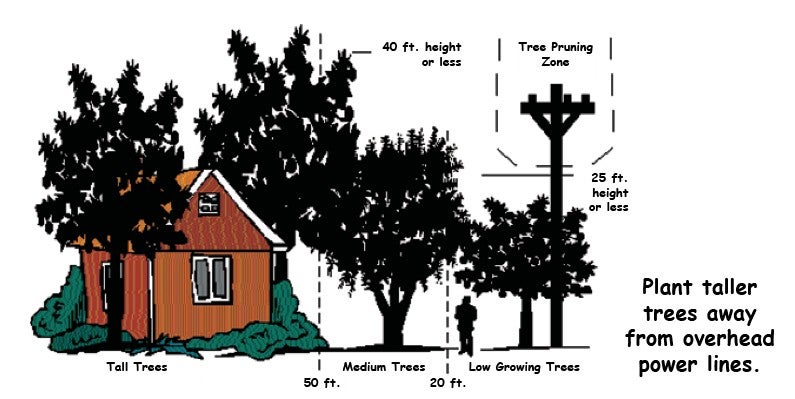
Texas has a wide variety of low-growing trees that can be planted near power lines. As a rule, trees planted near power lines should have a mature height of less than 25 feet. Taller growing trees must be planted farther away to prevent future problems. Homeowners should evaluate their trees near power lines and help ensure that they will not reach heights that will interfere with electric service.
Remember, before you plant a tree, look up for power lines and to locate any buried lines. Visit Texas 811 for more information. Remember, in Texas, it’s the law to call before you dig.
SPEC will remove trees that are directly beneath the lines or so close to the lines that they require severe trimming. The limbs will be chipped and hauled away and the trunk and larger limbs will be cut to whatever length the trees’ owner desires. The wood will not be split or hauled away.
Trees along the edge of the right-of-way that are severely leaning, dead, decayed, or otherwise hazardous to the lines may be removed. SPEC reserves the right to refuse to remove any tree which in its judgement can be safely removed by a private tree worker with no damage to our lines.
Public safety, reliable service and cost control are all important to us. That is why SPEC maintains a program of tree trimming and removal. Tree crews operate nearly year round to clear the lines to reduce tree related outages and to expedite service restoration during storms.
The information on the next page will help you understand the importance of planning ahead when you are landscaping your property. Trees in West Texas are a valuable commodity. Plan ahead to protect your investment!
Below is a list of low growing trees that can be planted adjacent to overhead power lines. Generally these trees will have a mature height of less than 25 feet. Contact your local nursery for recommendations and availability.
1. Flowering Dogwood
2. Mexican Plum
3. Dwarf Crapemyrtle
4. Crabapple
5. Washington Hawthorn
6. Desert Willow
7. Redbud
8. Japanese Black Pine
9. Yaupon Holly
10. Wax Myrtle
11. Japanese Maple
12. Flameleaf Sumac
13. Fringe Tree
14. Texas Mountain Laurel
15. Carolina Buckthorn
16. Mexican Buckeye
17. Possumhaw Holly
18. Texas Madrone
19. Saucer Magnolia
20. Purple-leaf Plum